When verse 26:214 of the Noble Qur’an was revealed — “Warn your nearest kin” — it served as the first command to make the call public. That very sūrah (al-Shuʿarāʾ) recounts the story of Moses: the announcement of his prophethood, the Exodus with the Children of Israel, their deliverance from Pharaoh’s hosts, and Pharaoh’s downfall. In those verses lay clear hints of what the Prophet ﷺ himself would soon face: a spiritual schooling in resilience, mercy for the faithful, and warning for those who turned away. It was both comfort for the Messenger and a solemn admonition to his people.
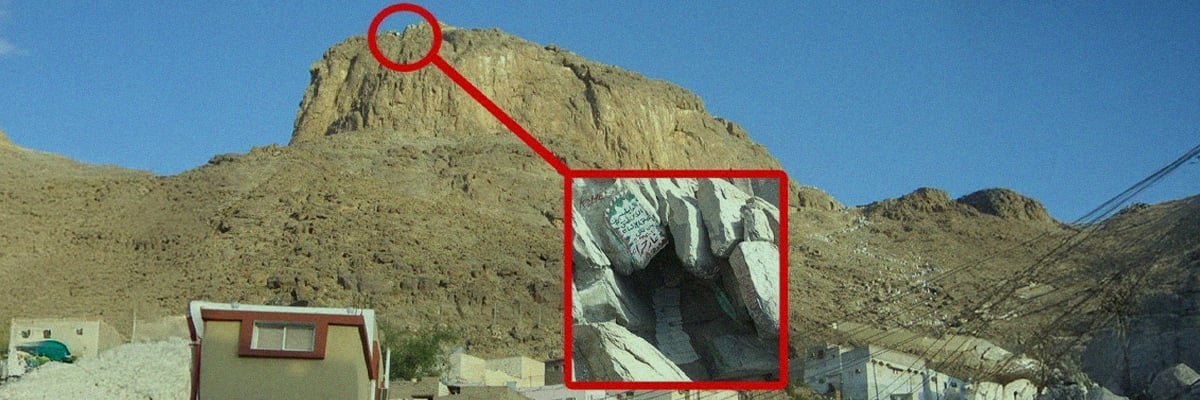
Following the Qur’anic instruction, the Prophet ﷺ gathered his kinsfolk — the leading men of his clans — and prepared a fine meal. Between forty and forty-five people attended. Then, addressing each group in turn, he climbed the hill of Ṣafā and called out:
“O descendants of ʿAbd Manāf, O sons of Hāshim!
O my uncle al-ʿAbbās! O my aunt Ṣafiyyah!
O family of ʿAbd al-Muṭṭalib! O my daughter Fāṭimah!
I possess nothing from Allah to give you on my own. Ask of my worldly wealth what you will. But answer me this: if I told you that a cavalry was massed behind this mountain ready to charge, would you believe me?”
They answered, “Indeed — we have never known you to lie.”
He continued, “Then I declare to you that I am the warner sent to you by Allah. No Arab has ever given his people a gift like the one I bring: the good of this world and the next. I call you to success — stand with me in this matter.”
All listened attentively — all but Abū Lahab. He snapped, “Was it for this that you gathered us? May you perish, O Muhammad!” (tabban laka yā Muḥammad). The Prophet ﷺ was pained, but Allah consoled him and answered Abū Lahab with Sūrat al-Masad (111):
“Perish the hands of Abū Lahab, and perish he! His wealth and gains will not avail him. He will enter a flaming Fire — and his wife, the carrier of thorny firewood — with a rope of palm fiber around her neck.”
(Events later unfolded exactly as foretold.)
At that very gathering, the young ʿAlī proclaimed his faith and pledged unwavering support.
From that moment, the Prophet ﷺ walked the open road of public preaching. He acted upon the command in 15:94 — “Proclaim what you have been commanded, and turn away from the polytheists.” He called, again and again, to the oneness of God; he exposed the irrationality of image-worship and the baselessness of polytheism, using clear examples and plain proofs. Those who listened with open hearts felt a deep inner peace — and many began to think anew.
But others met him with blind hostility. They started plotting to halt his mission. With the Ḥajj season approaching, Quraysh debated what to do: pilgrims would arrive from every land, hear Muhammad ﷺ, and be moved by him. If Quraysh had no unified line, they feared losing the narrative. So they turned to Walīd ibn al-Mughīrah to craft a single stance.
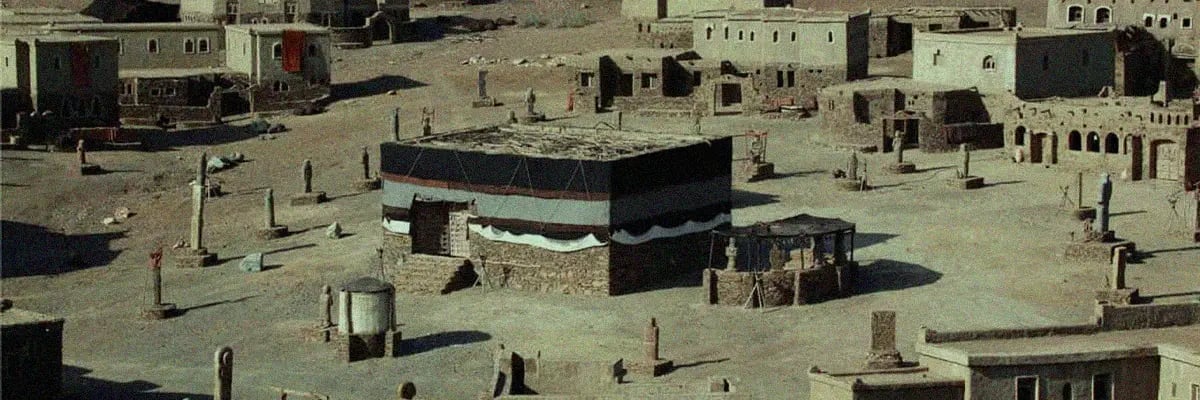
Ibn ʿAbbās relates: the Prophet ﷺ recited Sūrat Ghāfir beside the Kaʿbah. Walīd listened, enraptured, then went to a Makhzūm council and said:
“I have heard what Muhammad recites. By God, I know poetry — its meters, its ornaments, its forms — better than you. What he brings resembles none of it. His words possess wonder and sweetness, a unique splendor. Its branches are laden with fruit; its roots sink deep in rich soil. It surpasses all speech. It cannot be overcome; rather, it overwhelms all else.”
Whispers spread: “Walīd has become a Ṣābiʾ (has changed religion)!” Called “the perfume of Quraysh,” if he turned, others might follow. Abū Jahl hurried to “fix” it. He feigned concern at Walīd’s door: “Uncle, Quraysh are gathering funds to support you — but you must publicly dismiss Muhammad’s claims as nonsense.” Walīd replied that Quraysh knew his wealth; still, Abū Jahl pressed for a denunciation. Walīd said, “What can I say? His words are not those of man nor jinn.” “Say something to satisfy the people,” urged Abū Jahl. “Let me think,” Walīd answered.
He finally addressed the crowd: “The pilgrimage season is here. People will ask about Muhammad. Your message must be one. What shall we say?” They pushed him to decide. Suggestions came — fortune-teller? madman? poet? sorcerer? Walīd rejected each — the signs did not fit. In the end he conceded only the label “sorcery” (siḥr), not because it matched, but because it might serve.
The Qur’an intervened, exposing his scheming with the searing lines of al-Muddaththir 74:11–29 (sense conveyed):
“Leave to Me the one I created alone; I gave him ample wealth and sons at his side, and spread for him ease — yet he desires that I give more. No! He is stubbornly opposed to Our signs. I shall drive him up a mounting torment. He pondered and he schemed — may he be ruined for how he schemed! He glowered and scowled, then turned arrogant and said: ‘This is nothing but magic passed down; this is only the word of a human.’ I shall cast him into Saqar — a fire that spares nothing, leaves nothing, scorching away the skin.”
Nor were his supporters spared. 15:91–93 warned those who “tore the Qur’an into parts” that they would be called to account.
These revelations rattled the chiefs. Their counter-campaign backfired: the more they spoke, the more the Prophet’s ﷺ name spread across Arabia.
Quraysh then stationed men on every road into Makkah, under Abū Lahab’s command, to intercept pilgrims. He trailed the Prophet ﷺ into homes, markets, and fairgrounds — ʿUkāẓ, Majinnah, Dhū al-Majāz — heckling, calling him a renegade, warning people not to listen.
In one sense, the harassment was relentless; in another, it made the world notice that an extraordinary man had arisen in Makkah. Their slanders could not budge him from his mission, nor silence the Qur’an. After Ḥajj, they swore to eradicate both this “new religion” and its Messenger, and devised further tactics.
First tactic: Smear and isolate. They hurled accusations — “You, to whom this message has descended, are surely mad” (15:6); “a liar, a sorcerer” (38:4). They tried to scorch him with hostile glares and wound him with mockery (68:51). They jeered at his poor followers: “Are these the ones Allah has favored among us?” (6:53). The Qur’an replied that the criminals laughed at the believers, winked at one another as they passed, and mocked them as astray — but they were never set as guardians over the faithful (83:29–33).
Second tactic: Distract from the Qur’an. They spread tall tales of the ancestors to pull people’s attention away from the recitation. They tried to block attendance wherever the Prophet ﷺ recited — even during prayer — and effectively barred him from reciting at Quraysh gatherings until the fifth year of the mission. Still, some heard, and some believed.
Among the chief distractors was al-Naḍr ibn al-Ḥārith, who traveled to Ḥīrah, learned the legends of Persian kings — Rustam and Isfandiyār — and returned to perform near the Prophet’s assemblies, boasting: “I can speak better than Muhammad!” He hired singing girls to entice those leaning toward Islam, plying them with wine and entertainment. Ibn ʿAbbās narrates this; the Qur’an alludes to it in 31:6:
“Among people are those who purchase idle tales to mislead from the path of Allah without knowledge, and to make a mockery of it.”
Despite all of this, the Prophet ﷺ remained unshaken. His voice rose above the slander, his message pierced the noise, and hearts continued to turn.
Glossary:
Mushrik — one who associates others with Allah in worship (a polytheist).


_1777358421433.webp&w=3840&q=75)